SELECTED RESEARCH & ACADEMIC PROJECTS

Connecting images,
biology & AI.

From tissue-level biology to medical image analysis, my projects explore how computational methods can extract useful information from complex biomedical data.

Explore the questions, methods, and results across computational pathology, spatial transcriptomics, multiomics, and medical imaging.

10 projects

Institut Curie (in collaboration with Sanofi) | 2025

Identification of Tumor Gene Signatures Underlying Cancer-Associated Fibroblast–Driven T-cell Exclusion in Human Lung Cancer Using Spatial Transcriptomics

Problem. Which tumor gene signatures are associated with cancer-associated fibroblast (CAF) capsules and T-cell exclusion in lung squamous cell carcinoma?

Approach. We compared CAF-capsule-positive and negative tumors using Visium V2 and Visium HD spatial transcriptomics. The pipelines combined quality control, normalization, clustering, expert-reviewed annotation, and differential expression analysis; Cell2Location deconvolution helped remove mixed tumor spots in the V2 analysis.

Outcome. We identified eight candidate genes shared across both platforms and potentially associated with CAF-mediated T-cell exclusion. These exploratory associations require functional validation; gene identities remain undisclosed while the work is unpublished.
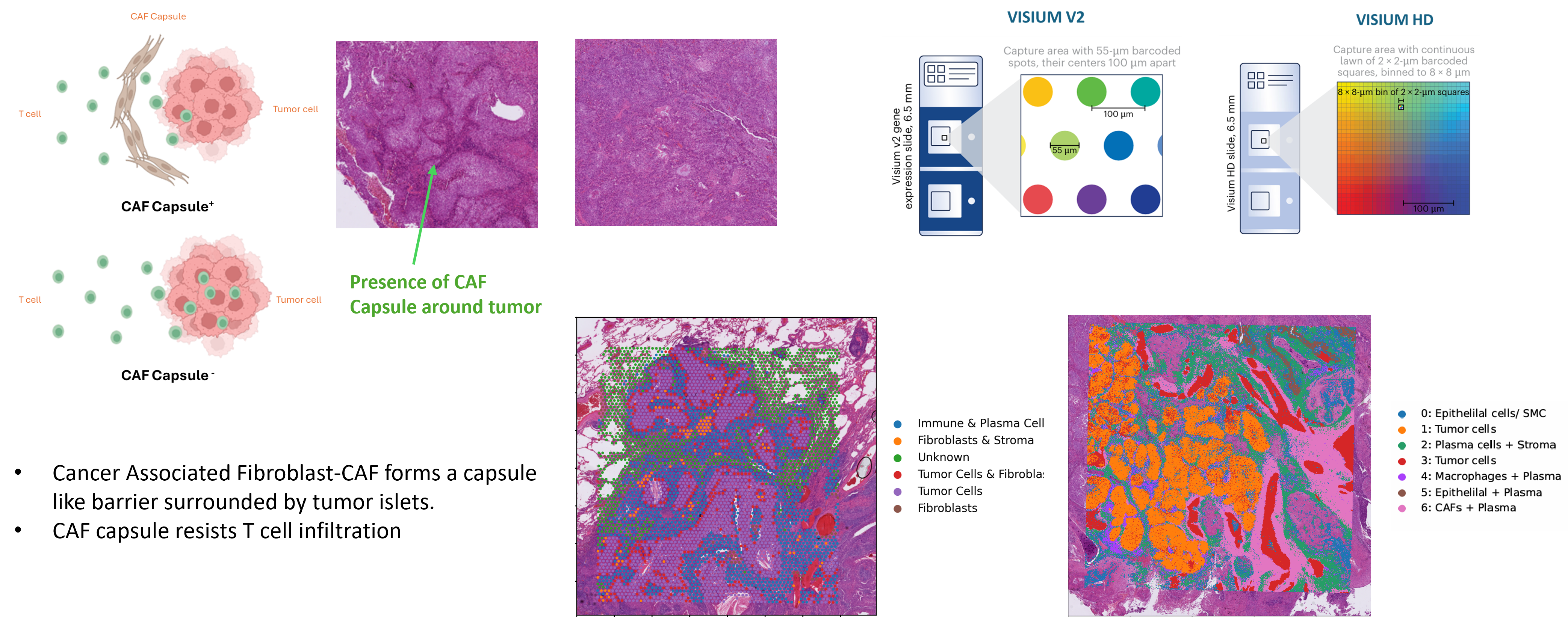
Curie thesis overview: CAF-associated T-cell exclusion, tissue morphology, Visium V2 and HD platforms, and spatial cell-type annotations
French National Centre for Scientific Research (CNRS) | 2024

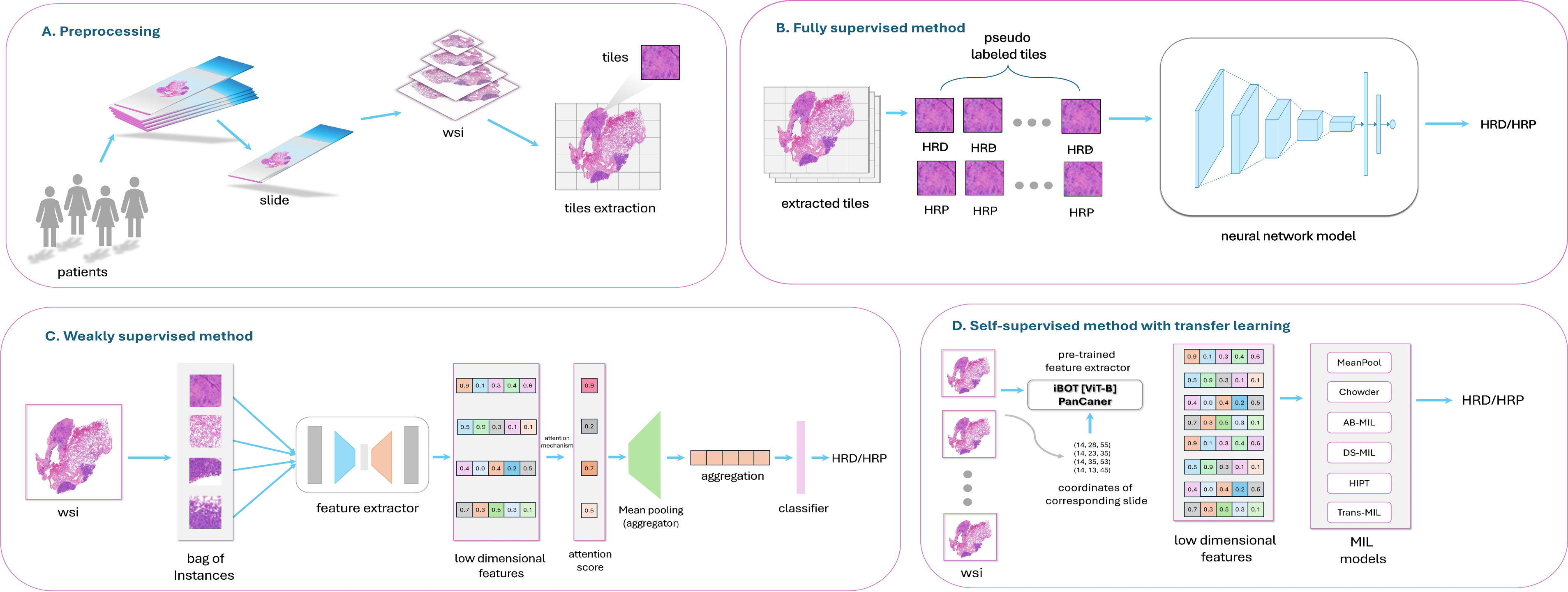
Prediction of Homologous Recombination Deficiency (HRD) Biomarker in Breast and Ovarian Cancer Whole Slide Histopathology Images Using Deep Learning

Problem. Can routine H&E whole-slide images predict homologous recombination deficiency (HRD) when labels are available only at slide or patient level?

Approach. We compared tile-label CNN baselines, attention-based multiple instance learning, and pretrained Phikon features using patient-level nested cross-validation and an independent ovarian cohort.

Outcome. Phikon + Trans-MIL achieved the highest reported AUC: 0.77 in breast cancer, 0.66 in TCGA ovarian cancer, and 0.64 in the independent ovarian cohort. Modest external performance and low breast-cancer sensitivity highlight the need for further validation.

HRD prediction methodology: whole-slide preprocessing, tile-label CNN baseline, attention-based MIL, and foundation-model transfer learning
Sorbonne University | 2025

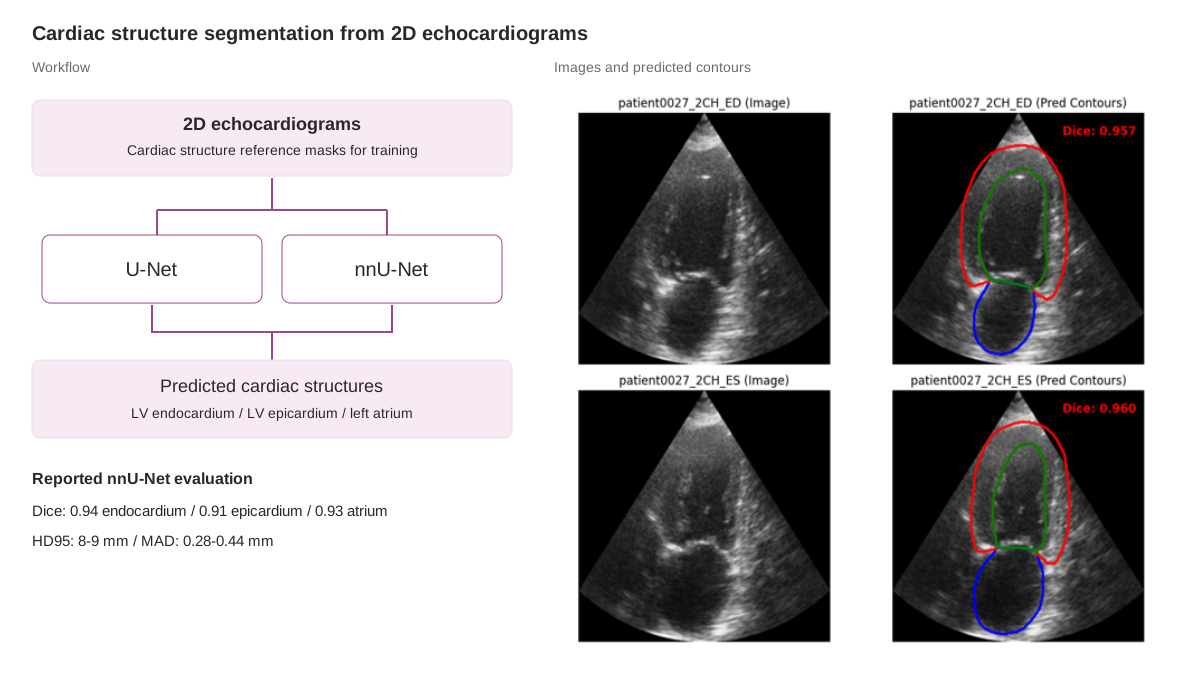
Automated Cardiac Structure Segmentation from 2D Echocardiograms Using Deep Learning

Developed and compared U-Net and nnU-Net pipelines for segmenting cardiac structures from 2D echocardiograms. nnU-Net outperformed U-Net, achieving Dice scores of 0.94 for LV endocardium, 0.91 for LV epicardium, and 0.93 for the left atrium, with HD95 of approximately 8–9 mm and mean absolute distance (MAD) of 0.28–0.44 mm.

U-Net and nnU-Net comparison workflow beside the supplied echocardiography images and predicted cardiac contours
Sorbonne University | 2024

Breast cancer subtype classification from multi-omics data using machine learning

Developed a pipeline integrating copy-number variation, DNA methylation, mRNA, and miRNA data for breast cancer subtype classification. Implemented preprocessing, early data fusion, and feature selection, and compared six machine-learning classifiers. XGBoost achieved the best performance, with a balanced multiclass accuracy of 0.82.

Multiomics subtype classification workflow integrating CNV, DNA methylation, mRNA, and miRNA, with classifier comparison and a five-class confusion matrix
University of Girona | MAIA Segmentation Challenge | 2023

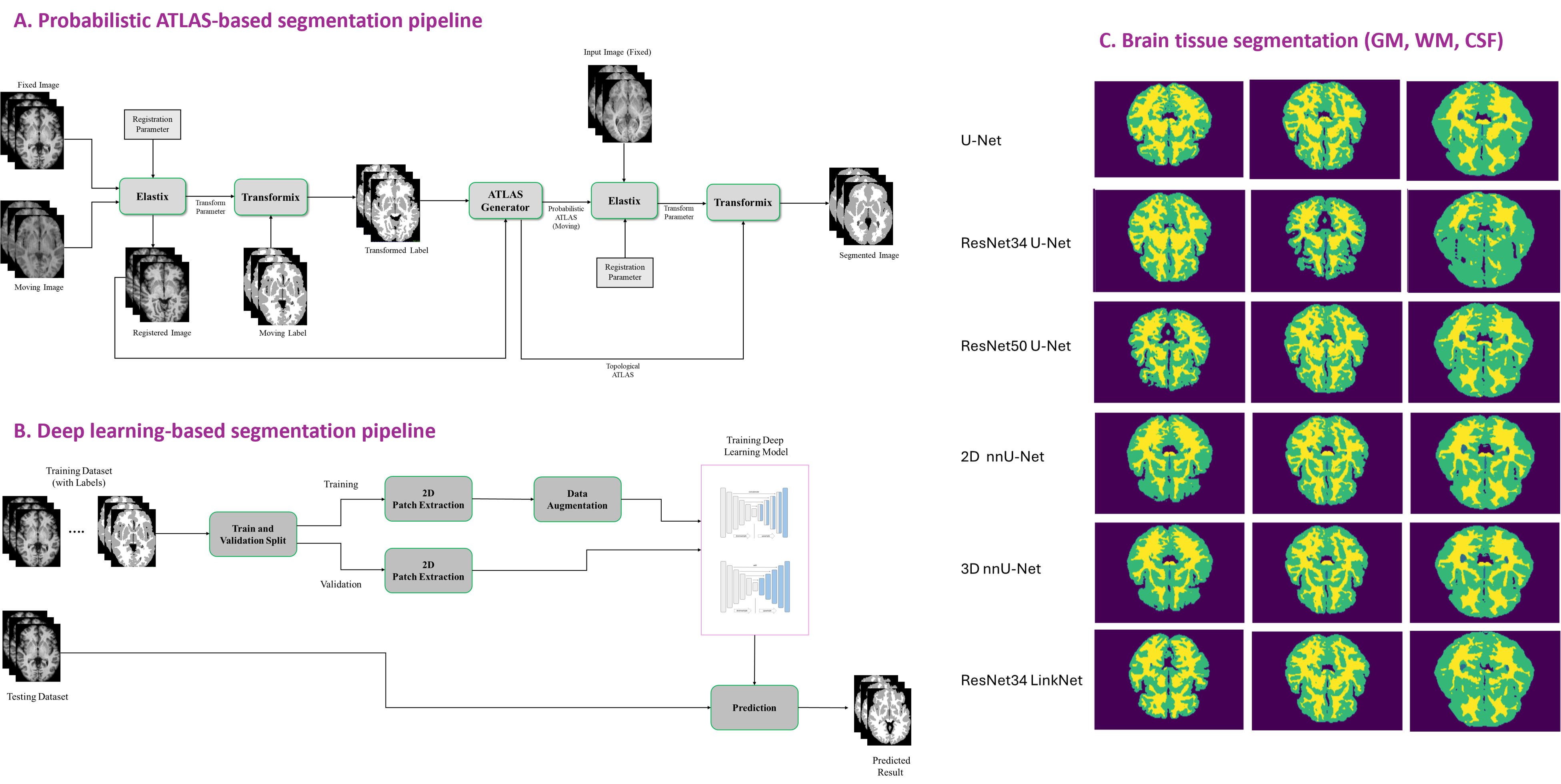
Automatic Brain Tissue Segmentation from MRI

Developed a pipeline for segmenting gray matter, white matter, and cerebrospinal fluid from IBSR18 brain MRI scans. Implemented bias-field correction, denoising, normalization, patch extraction, and data augmentation, and compared probabilistic atlas-based segmentation with U-Net, LinkNet, and 2D/3D nnU-Net. The 3D nnU-Net achieved the highest mean Dice score (0.937 ± 0.012); the project placed second in the MAIA brain tissue segmentation challenge at the University of Girona.

View project
MRI brain tissue segmentation: probabilistic atlas-based pipeline, deep learning pipeline, and gray matter, white matter, and cerebrospinal fluid segmentation examples
University of Girona | 2023

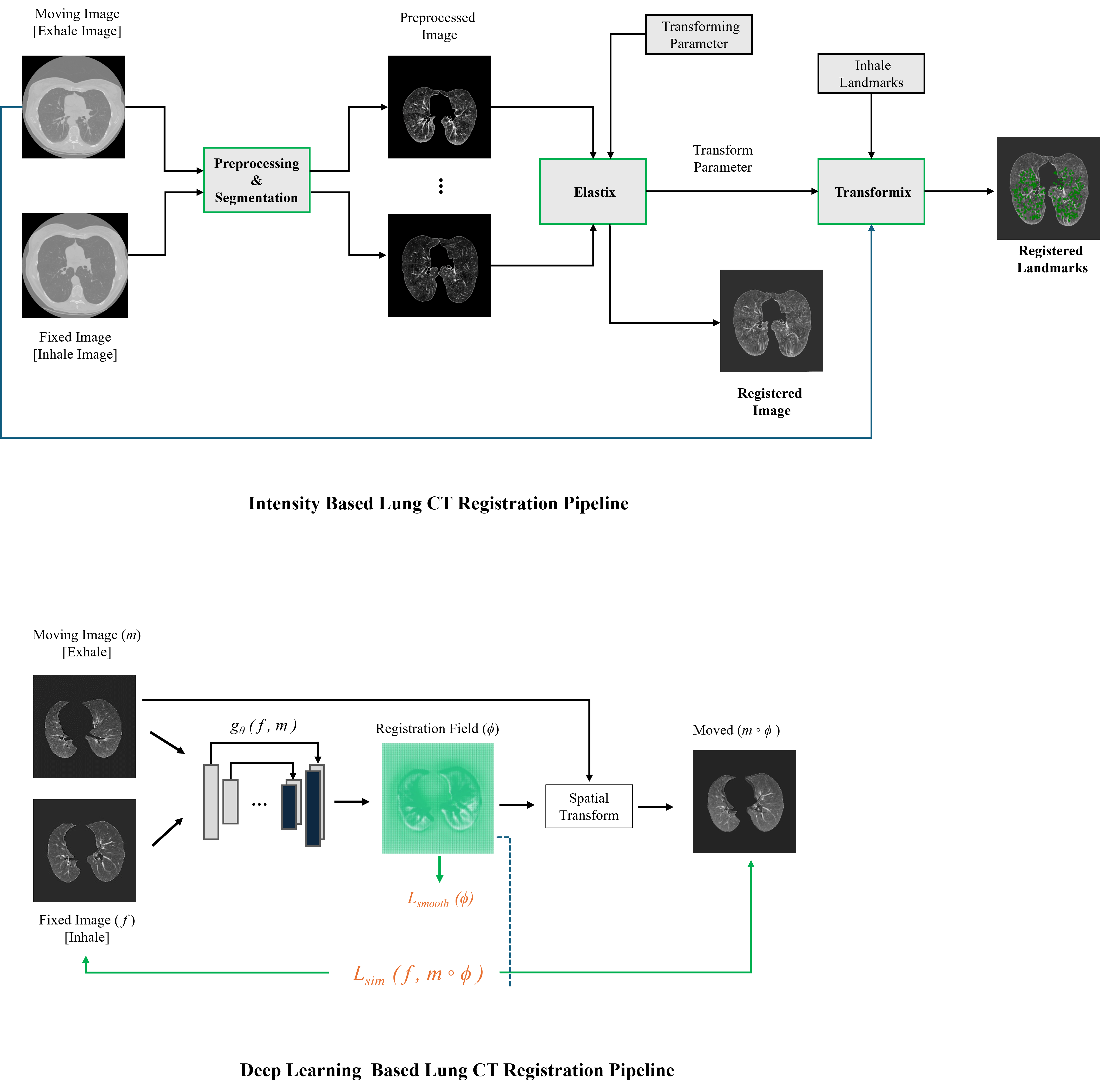
Lung CT Registration Using Intensity-Based Methods and Deep Learning

Developed a pipeline to align inspiratory and expiratory lung CT scans from four COPDgene cases. Implemented intensity preprocessing and lung segmentation, and compared affine and B-spline registration using Elastix/Transformix with VoxelMorph deep learning. The intensity-based approach achieved a lower mean target registration error (2.08 ± 2.26 mm) than VoxelMorph (2.18 ± 2.74 mm), with limited training data constraining the learning-based approach.

View project
Lung CT image registration project figure for intensity-based and deep learning registration methods
University of Girona | MAIA CADx Challenge | 2023

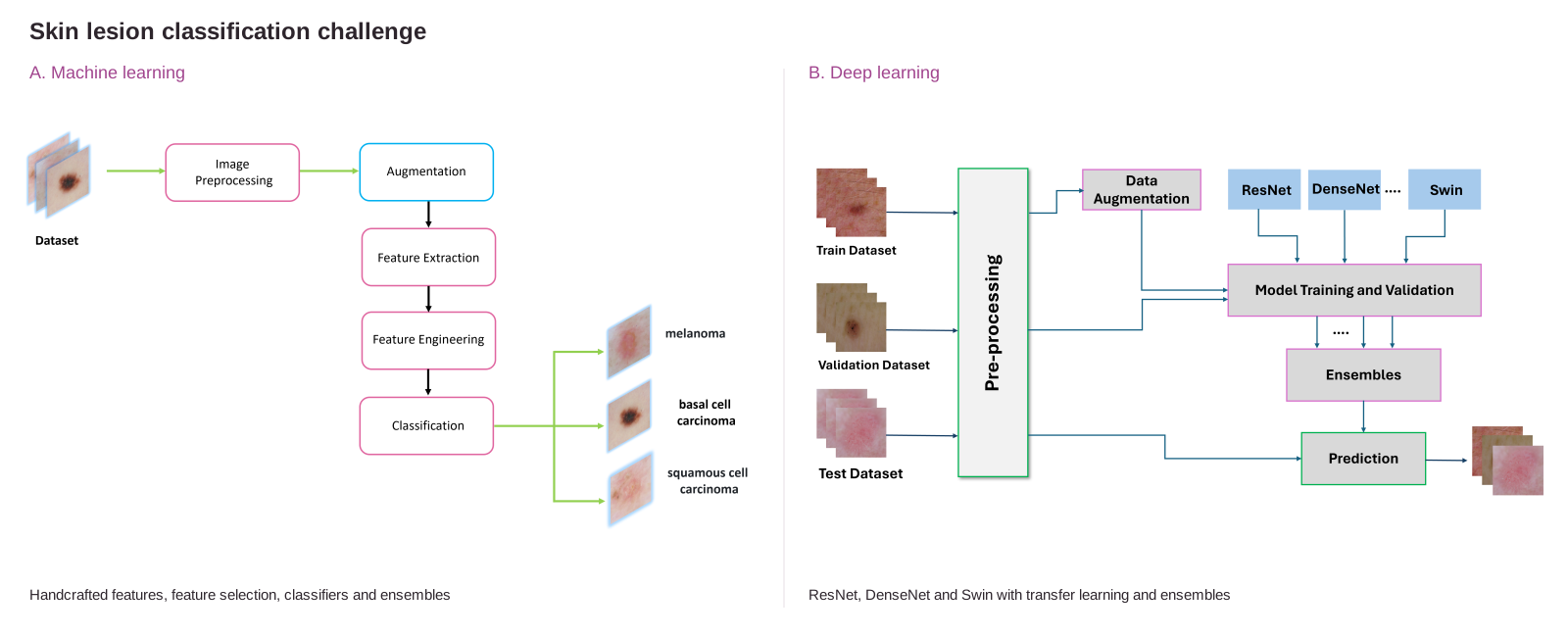
Skin Lesion Classification Challenge

Developed machine-learning pipelines using handcrafted image features, feature selection, and classifier ensembles. The ML approach achieved 0.8590 binary test accuracy and a multiclass test kappa score of 0.74. Implemented deep-learning transfer learning with ResNet/ResNeXt, DenseNet, EfficientNet, and Swin transformers, using normalization, geometric and color augmentation, and prediction-averaging ensembles. The best recorded ensemble validation accuracy was 0.9070 for binary classification and 0.9693 for multiclass classification, with multiclass Cohen’s kappa of 0.9448. Both the ML and DL approaches achieved second place in their respective MAIA CADx challenges at the University of Girona.

View project
Two-panel skin lesion classification figure comparing handcrafted-feature machine learning and deep learning with model ensembles
University of Cassino and Southern Lazio | 2023

Breast Mass Detection Using Machine Learning from Mammograms

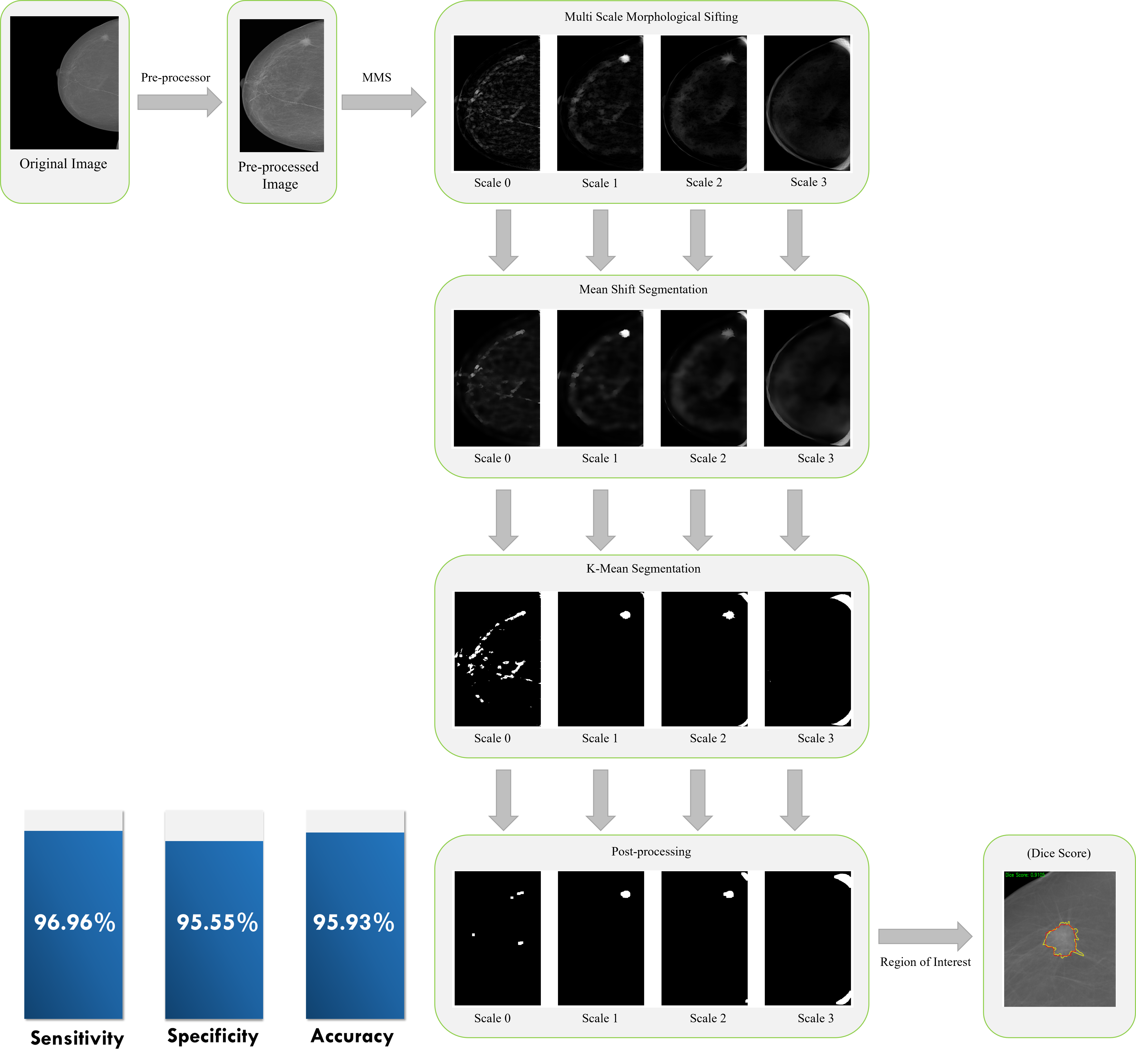
Developed an end-to-end pipeline for automated breast mass detection from mammograms, combining multi-scale morphological shifting and mean shift filtering with k-means segmentation, feature extraction, and machine-learning classification. Integrated the uCAS ML framework, achieving sensitivity of 0.96, specificity of 0.95, and accuracy of 0.95. Presented in the poster session at the 17th EXCITE Summer School on Biomedical Imaging at ETH Zurich and the University of Zurich.

View project
Breast mass segmentation and detection project figure for mammography analysis
University of Cassino and Southern Lazio | 2023

Automated Skin Lesion Classification Using Transfer Learning and Hybrid Models

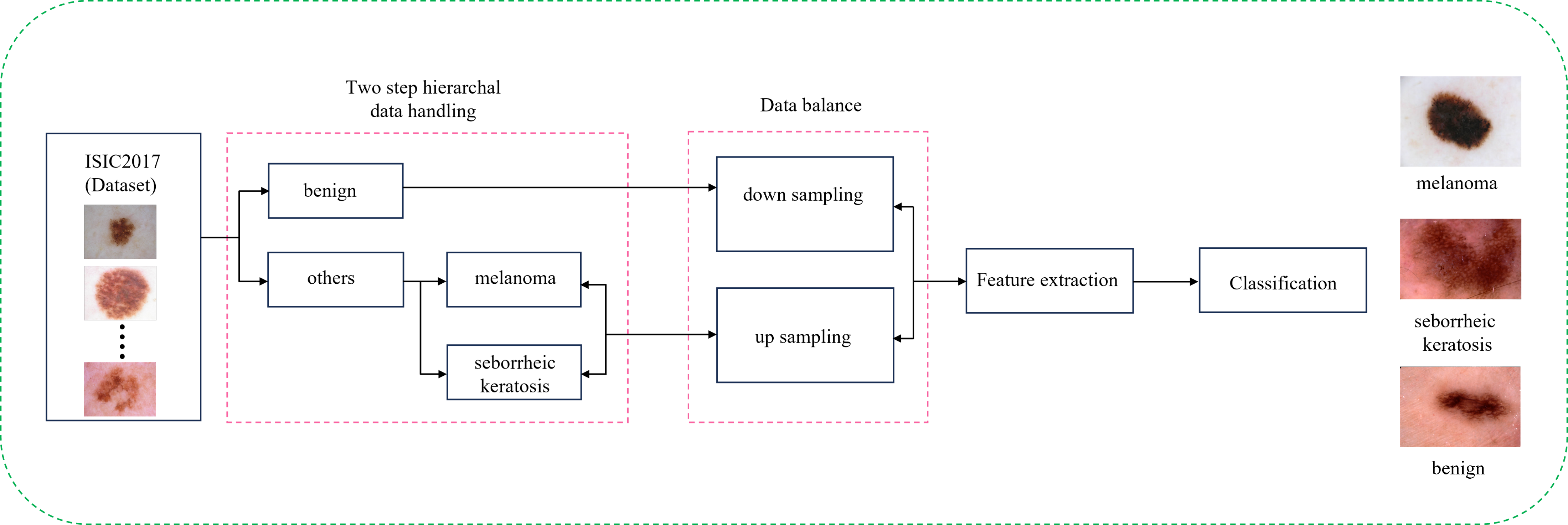
Developed a two-stage classification pipeline on ISIC 2017 dermoscopic images: benign versus other lesions, followed by melanoma versus seborrheic keratosis. Implemented image resizing, normalization, and class balancing, and compared fine-tuned CNNs with pretrained CNN features paired with machine-learning classifiers. On the 600-image test set, Xception features with Random Forest achieved the highest reported balanced multiclass accuracy of 0.79, compared with 0.76 for the best transfer-learning models.

View project
Automated skin lesion classification using transfer learning and hybrid machine-learning methods
University of Cassino and Southern Lazio | MAIA Statistical Learning Challenge | 2023

Alzheimer's Disease Classification

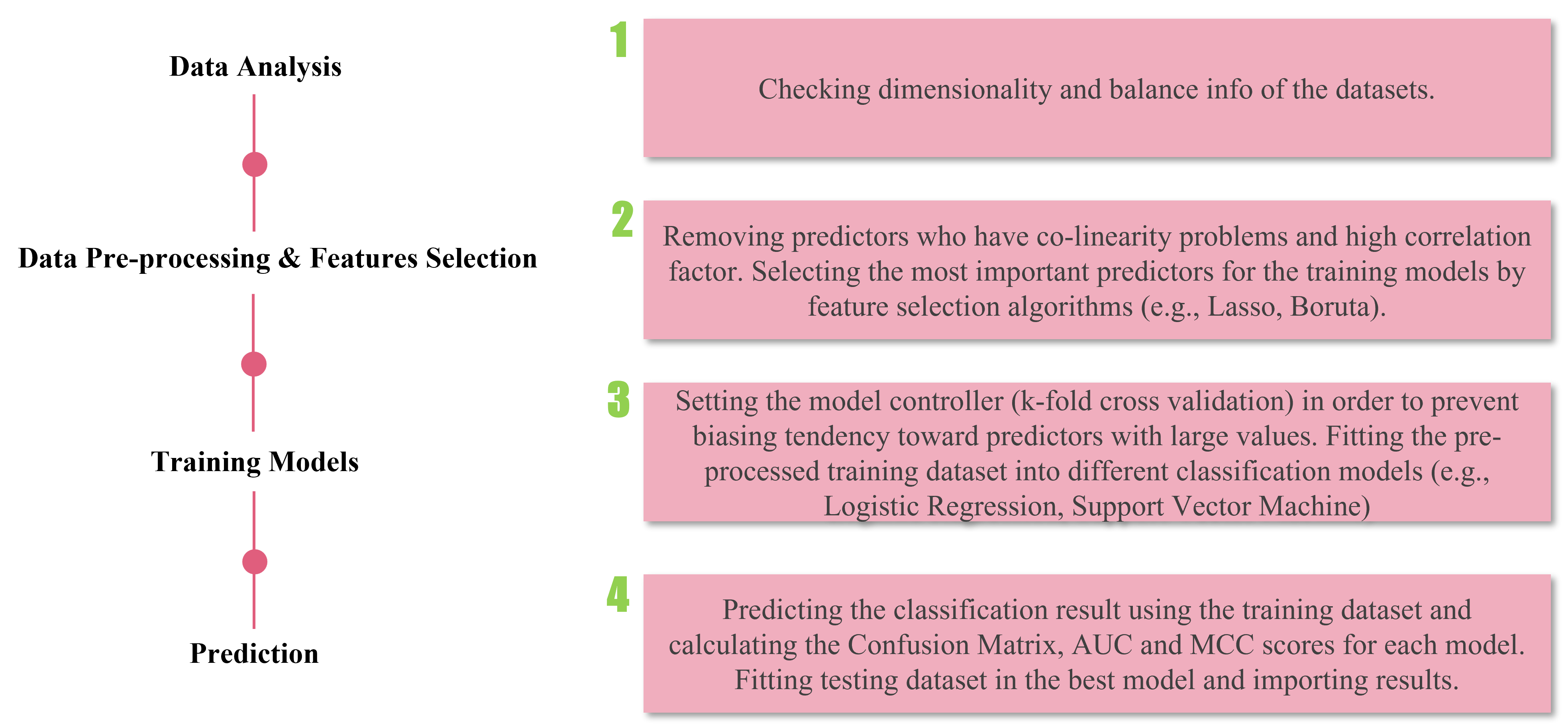
Developed a machine-learning pipeline using MRI-derived and gene-expression features for three pairwise tasks: Alzheimer’s disease versus controls, Alzheimer’s disease versus mild cognitive impairment (MCI), and MCI versus controls. Implemented collinearity and correlation filtering, LASSO, Boruta, and PCA-based feature selection, and compared classifiers using 10-fold cross-validation. QDA with Boruta or LASSO gave the best reported training-set AUCs: 0.963, 0.831, and 0.876 for the three tasks, respectively; these are not held-out test scores.

View project
Alzheimer?s disease classification workflow using MRI-derived and gene-expression features